AI Automation
Automation That Actually Runs the Business
Most automation fails because it’s built as disconnected shortcuts instead of a system. Ismaeel builds systems that hold up when something unexpected happens.
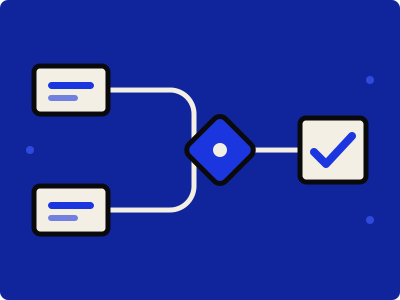
Most automation fails because it’s built as disconnected shortcuts instead of a system. Ismaeel builds systems that hold up when something unexpected happens.
AI is asked to handle steps that should be deterministic. The workflow becomes unpredictable and expensive to run.
It was built fast and never documented. When it breaks or needs changing, the business is dependent on whoever built it.
Effort goes into a flashy use case while the real time drain — lead follow-up, booking admin, recurring reporting — stays manual.
Make.com and n8n systems connecting CRM, calendar, email and lead sources into one reliable pipeline.
Retell AI systems for enquiry handling, qualification and booking, with sensible handover to a human.
Webhook and API connections between tools that don’t natively talk to each other.
Enquiries routed by source and type, with sequenced follow-up that runs whether or not anyone remembers.
Recurring reports assembled and delivered on schedule instead of rebuilt by hand each month.
Every system documented so the team can maintain and extend it independently.
Separating these keeps systems reliable. Most broken automations fail because reasoning and execution were tangled into the same step.
Businesses losing hours each week to manual lead follow-up, booking admin or repetitive reporting that could run in the background instead.
Book a call and Ismaeel will map where the real time is going. Often the highest-value automation is the least exciting one.
Make.com and n8n for workflow automation, Retell AI for voice, plus direct webhook and API integrations where a platform connector doesn't exist.
Yes. Systems are documented and handed over, so the team can adjust them without depending on the person who built them.
Lead routing, follow-up sequences, booking confirmations, enquiry handling, data syncing between tools, and recurring reporting. Judgement-heavy work is better supported by automation than replaced by it.
No, and assuming it is makes systems slower and more expensive. AI is used where a step genuinely requires reasoning; everything else runs as deterministic execution.